top of page
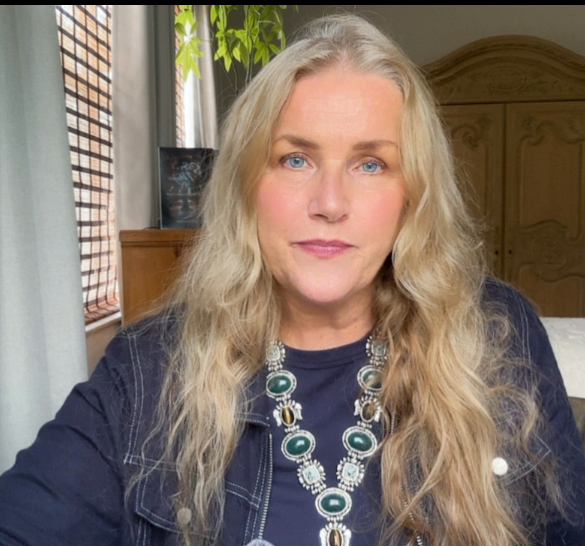
women having a converstion about self worth and astrology

 CONVERSATIONS

All Posts

End of the year of the Snake and Entering the year of the Horse

The moment I took my power back was when I began remembering everything that had been erased. December twenty-one marks the shortest day of the year, which is called the Winter Solstice. It is to honor the blessings from the past and future in the present moment—the moment of slowing down long enough to integrate everything learned, revealed, and discarded.


What I learned is that time runs in cycles and we activate it through our actions. We can slow it down through presence or speed it up through unconscious behavior. An example, scrolling on social media, and then realizing two hours have gone by in a matter of what felt like minutes. Presence seems to be more of a struggle every day, and this time of year it’s even harder. We create a monumental list of things to accomplish in a shorter period. And then hop onto social media to compare ourselves to unrealistic time loops. This year, I refused to participate in this illogical tradition; No tree, presents, or burnout. I am choking on consumerism, which leaves a bad taste in my mouth.


Learning about sacred geometry, the Seed of Life, which consists of seven overlapping circles representing the seven days of creation, symbolizes fertility, divine creation, and the interconnectedness of life, helped me to see time differently. But I had one question: how do the circles interlink to form a flower? The circles aren’t just sitting on top of each other; they must integrate.

ree

This question took me back to the astrological wheel and the twelve houses that represent our evolution through time. I studied the eighth house of death and rebirth, ruled by Pluto, the planet that destroys to transform. And the ninth house of higher mind, ruled by Jupiter, the planet of expansion. But how do we die and then be reborn as a person whose mind is enlightened? I mean, if the circle of life symbolizes fertility and interconnectedness, why doesn’t the astrological wheel show a house of integration?

ree

The funny thing about consciousness is that when you have questions, the answer will appear if you are present enough to catch the synchronicities.


I heard my inner voice say Arizona, the resonance aligned within me as a place to discover for relocation. What I didn’t consider was that the trip was planned for December 6th to December 12th. Why does this matter? On December 6th, the energy of the Full Moon in Gemini, the zodiac of communication, was still potent. And on December 12th, the opening of the 1212 portal began. The 1212 portal represents the completion of an old cycle, and with the energy of the full moon still lingering, it would be through conversation that something would be revealed to me in Arizona.


Remember, the Winter Solstice is about everything learned, revealed, and discarded as the year comes to a close. So, the Universe wanted me to receive the answers to my questions without forgetting I was also closing out old shadows to integrate before the end of the year.


This year is a nine-year of endings, and next year reverts to one, a fool’s journey, and new beginnings. You can’t bring old shadows into a new year. Leaving the year of the Snake, which is wisdom, transformation, intuition, and rebirth, and entering the year of the Horse, signifying freedom, independence, energy, and adventure.


I recognize the same emotions stirring inside about how we use our time from last year. But I didn’t figure out how I would do things differently this year. I was still repeating an old, outdated loop that I do not align with. Today, I am sharing a secret I discovered and the reason why I haven’t broken a paradigm and integrated with a new version of myself.


Ophiuchus (pronounced off-ee-YOU-kus) is the secret. What or who is Ophiuchus? She is the 13th zodiac, located between the 8th and 9th astrological houses, the Serpent Bearer, the Divine Feminine healer, the Snake Goddess, the Divine Mother, the Caduceus. She is the house of integration, the shedding of old paradigms, the missing piece to heal the broken cycles, forming a new cycle, the circles of the Flower of Life. The Sun travels through the Ophiuchus constellation roughly from November 29th to December 17th. The same week, I visited Arizona.


You want to hear something really crazy? Her statue is in Sedona, Arizona! The place where I traveled during the time the Sun was in the constellation of Ophiuchus. During my revelation that shining my light makes other people feel uncomfortable. Shedding the belief that I need to dim to feel safe.


Ophiuchus the Serpent Bearer in Sedona, Arizona

Why do women dim their light?

Most women didn’t wake up one day and decide to become smaller. The message was received, not chosen.


It came from many directions at once:


  • Early social conditioning

    Girls are often praised for being agreeable, helpful, pretty, and easy to manage—long before they’re praised for being bold, authoritative, or unapologetic.

  • Relational feedback loops

    When a woman expresses confidence, desire, ambition, or certainty and is met with withdrawal, ridicule, punishment, or abandonment, her nervous system learns: this is unsafe.

  • Cultural archetypes

    Society has long split women into narrow categories: the good girl, the selfless mother, the supportive partner, the muse—but not the central force.

  • Inherited trauma


    Many women carry unspoken memories from mothers and grandmothers who paid a real price for visibility—social exile, financial dependence, emotional or physical danger.


Dimming the light was never a weakness. It was an adaptation.


How it shows up in relationships

When a woman dims her light, it often appears as:

  • Over-explaining or softening the truth so others don’t feel uncomfortable

  • Shrinking desires to match a partner’s capacity

  • Confusing emotional labor with love

  • Being “low maintenance” at the cost of authenticity

  • Letting resentment build instead of risking conflict

  • Making herself palatable rather than powerful

In romantic relationships, especially, this can look like:

  • Choosing partners who feel safe because they don’t see her fully

  • Losing attraction when she begins to shine again

  • Feeling invisible, unchosen, or emotionally lonely while partnered

The tragedy is not that she gave less—it’s that she gave everything except herself.


What it is not

This is important to name clearly.

Dimming your light is not:

  • Humility

  • Kindness

  • Feminine receptivity

  • Emotional intelligence

  • Spiritual maturity

  • “Being healed”

  • Compromise


True humility doesn’t require self-erasure.

True femininity doesn’t require containment.

True love doesn’t ask for disappearance.


If your authenticity threatens a relationship that was built on performance, that is not intimacy.


What the shadow suppresses

The shadow is not evil—it is exiled power.

What many women suppress in their lives:

  • Healthy anger → becomes guilt or self-blame

  • Desire → becomes neediness or numbness.

  • Authority → becomes people-pleasing

  • Erotic life force → becomes anxiety or exhaustion.

  • Certainty → becomes chronic self-doubt.


The shadow holds the parts of a woman that were too much for the environments she survived.


And here’s the paradox:

What was once too much is often exactly what is needed now.


Reclaiming the light (without burning everything down)

Reclaiming your light doesn’t mean becoming harsh, aggressive, or unrecognizable.

It means:

  • Allowing your presence to take up space without apology

  • Letting disappointment be felt instead of managed

  • Telling the truth before resentment calcifies

  • Being seen before being chosen

  • Trusting that the right relationships expand when you expand


When a woman stops dimming, some relationships will fall away—not because she failed, but because they were calibrated to her absence.


Loved vs. Managed — the core difference.

Love meets you as a sovereign being.

Management relates to you as a variable to be controlled.

One honors who you are.

The other tolerates you as long as you remain predictable.


How being loved feels (even when it’s uncomfortable)

You are being loved when:

  • You can express truth without rehearsing it.

  • Your emotions are received, not optimized or corrected.

  • Conflict doesn’t threaten the bond—it deepens it.

  • You’re not punished for evolving.

  • Your “no” doesn’t trigger withdrawal or manipulation.

  • You don’t have to make yourself smaller to stay connected.

  • Your presence is welcomed, not managed for mood stability.


Love allows friction.

Love expects growth.

Love does not require you to stay the same person to remain worthy.


You feel:

  • Grounded

  • More yourself

  • Calm after expression

  • Seen even when misunderstood


How being managed feels (even when it looks “nice”)

You are being managed when:

  • Your tone matters more than your truth.

  • You’re praised for being “easy,” “low maintenance,” or “understanding.”

  • Emotional reactions are subtly discouraged.

  • You sense invisible rules you must follow to keep the peace.

  • Your partner regulates you instead of themselves.

  • You’re rewarded when you comply, and destabilized when you don’t

  • Your power, clarity, or certainty creates distance.


Management often hides behind:

  • Calmness

  • Logic

  • Spiritual bypassing

  • “I just want harmony.”

  • “You’re overreacting.”

  • “Let’s not make this a big deal.”


You feel:

  • Tightness in the chest or throat

  • Hyper-aware of timing and delivery

  • Afraid of being “too much.”

  • Confused about why you’re tired or resentful

Management doesn’t ask who you are


It asks how to keep you manageable.


A simple litmus test

Ask yourself this:

When I become more honest, more alive, more myself—does this relationship strengthen or destabilize?
  • If it strengthens → you’re being loved

  • If it destabilizes → you’re being managed.

Love can handle your expansion.


Management depends on your containment.


What makes this hard for women to see

Many women were conditioned to confuse:

  • Emotional regulation with emotional suppression

  • Kindness with self-erasure

  • Safety with predictability

So management can feel like love at first—especially if it’s calm, consistent, and socially acceptable.

But love doesn’t require you to dim your light to be kept.


The quiet truth most women feel but don’t name

If you find yourself asking:

  • “How do I say this without upsetting them?”

  • “Is this worth bringing up?”

  • “Maybe I should just let it go… again.”

That’s not intuition telling you to be mature.


That’s your system responding to conditional safety.


What changes when you stop being manageable

When you stop managing yourself for others:

  • Some relationships end

  • Some relationships deepen

  • Some people reveal they loved the version of you that didn’t need much.


This is not a loss.

This is calibration.


Exiting a managed dynamic without drama is less about what you say—and more about what you stop negotiating.

Drama feeds on reactivity.

Clarity starves it.

Here’s how to leave cleanly, power intact, and nervous system steady.


First: understand why drama happens.

Drama usually erupts when:

  • You announce a boundary instead of living it.

  • You argue for permission to change.

  • You try to be understood by someone invested in your predictability.

  • You explain your evolution to someone who benefits from your containment.

Management collapses when you withdraw participation—not when you confront it.


Step 1: Regulate before you communicate

Before any conversation, stabilize your body.

Signs you’re regulated:

  • Your chest is open, not tight.

  • Your breath is slow

  • You’re not rehearsing rebuttals.

  • You don’t need a specific outcome.

If you’re seeking validation, you’re still inside the dynamic.


Step 2: Make the decision privately

Do not workshop your exit with the person you’re exiting.

Once you’ve decided:

  • Stop over-functioning

  • Stop emotional cushioning

  • Stop preemptive apologies

  • Stop managing their reactions.

Your nervous system must know: I am no longer negotiating my reality.


Step 3: Name the shift, not the history

You do not need to explain the past to justify the future.

Use statements that:

  • Are present-focused

  • Are brief

  • Don’t invite debate

Examples:

  • “This dynamic no longer works for me.”

  • “I’m choosing something different for myself.”

  • “I’m not available for this pattern anymore.”

Silence after the sentence is part of the boundary.


Step 4: Expect destabilization—and don’t fix it

When management ends, the other person may:

  • Become emotional

  • Become logical

  • Become spiritual

  • Become victimized

  • Suddenly, offer a change.

This is not proof you’re wrong.

This is a withdrawal from a control system.

Do not:

  • Reassure

  • Over-clarify

  • Debate tone

  • Collapse into caretaking

Regulation is not cruelty.


Step 5: Let your consistency do the talking

Boundaries aren’t speeches.

They’re patterns.

Drama fades when:

  • You repeat yourself less.

  • You don’t explain new decisions.

  • You don’t rush to resolve discomfort.

  • You let others manage their own emotions.

The cleanest exit is boringly consistent.


Step 6: Grieve without romanticizing

You can honor what was without reopening the door.

Grief doesn’t mean doubt.

Missing someone doesn’t mean you made the wrong choice.

You are allowed to leave even if:

  • They didn’t mean harm.

  • They love you in their way.

  • They don’t understand

  • You were once happy


Step 7: Re-anchor in self-trust

Ask yourself daily:

“What would staying true to myself look like today?”

Each aligned action rebuilds authority in your body.

That’s how you exit without drama:


Not loudly.


Not defensively.


But decisively.


The truth that few people say out loud

People who loved you won’t need drama to process your departure.

People who need to manage you will.

Your calm is not avoidance.

It’s evidence you’re no longer available for containment.


So, during the time of slowing down and taking inventory of your year, ask yourself,

“What needs to be released for the new version of me to blossom?”


ree

PODCAST EPISODE 116.


Intro:

  • Welcome back to Life Isn’t Over Yet

  • Quick update on the break and new surroundings

  • Setting the tone: This episode is about Divine Feminine embodiment and cosmic remembrance

Segment 1: The Call of the Goddess

  • Introduction to Goddess Ishtar and how she came through during Celia's awakening

  • Understanding Divine Feminine as source energy, creativity, intuition

  • How ancient wisdom awakens within us when we’re ready

Segment 2: Cosmic Blueprint for Abundance

  • Astrology as a remembrance tool, not a prediction tool

  • How your Rising Sign defines your Avatar & energetic essence

  • The importance of the Second House: self-worth, money, gifts, and Venus

  • Why acting “as if” requires soul-level self-awareness

Segment 3: Manifestation Through Alignment, Not Force

  • Cancer New Moon conjunct Jupiter: emotional richness & feminine awakening

  • Universal law of giving and receiving

  • Burnout from hustle culture vs. attraction through flow and joy

  • The truth about surrender: letting go to manifest

Segment 4: Magnetic Self-Worth & the Path of Ease

  • Venus ruling both the 2nd and 7th houses: value → magnetism → relationship

  • When you know who you are, everything changes

  • Magnetic self-assurance: living as your full, radiant self

  • Receiving mode as the key to manifestation

Segment 5: Play, Summer Energy & Divine Feminine Fun

  • Why summer awakens the feminine essence

  • Finding joy in scent, sun, creativity, and lightness

  • A story about recreating the old Coppertone scent—featuring Venus #6 energy!

  • Encouragement to reclaim ease, fun, and flow this summer

Closing:

  • Reminder: You are the bridge to a new world

  • The awakening is now. You are ready.

  • Subscribe, share with a sister, and stay in your magic


ree

PODCAST EPISODE 115.


1. Introduction & Welcome (0:00–2:00)

  • Warm welcome to returning and new listeners

  • Quick recap: Previous episode on the natal chart and houses as rooms

  • Mention of low views as intuitive redirection

  • Setting the tone for today's episode: tapping into imagination under the Sagittarius full moon

2. Sagittarius Full Moon Energy (2:00–7:00)

  • Date of full moon: June 11

  • What full moons symbolize: letting go and illumination

  • Sagittarius themes: 9th house, philosophy, higher truth, expansion, travel, publishing

  • Encouragement to use rituals (candles, altar, journaling)

3. The Renaissance, Humanism & Divine Imagination (7:00–12:00)

  • Inspiration from the Age of Enlightenment and the Renaissance

  • Michelangelo’s process as metaphor: the vision is within the stone

  • Imagination as a sacred connection to Source

  • We’ve forgotten how to see through this lens

4. The Power of Imagination (12:00–18:00)

  • Imagination is the original creative tool of the soul

  • It’s not just for artists—it’s your divine design tool

  • How society conditions us to undervalue imagination

  • Hard work vs. soul-led creation

5. Jupiter in Cancer: Emotional Expansion (18:00–22:00)

  • The transit of Jupiter into Cancer this month

  • Cancer energy: feminine, nurturing, subconscious

  • Questions to ask: What beliefs are surfacing? How can I nurture my vision?

6. Chart Placement Example + How to Look Up Your Own (22:00–26:00)

  • Example: Host's Cancer in 6th house (daily habits, health, service)

  • How to pull your natal chart (astros.com or astroseek.com)

  • Use the Whole Sign system

  • The importance of the time of birth

7. Journaling & Inner Child Work (26:00–32:00)

  • Question prompt: When did I stop believing in magic?

  • Reclaiming the childlike essence

  • Using imagination to manifest without resistance or limitation

  • Gemini season: communication, storytelling, self-expression

8. Your Personal Grimoire: Modern Magic Tool (32:00–38:00)

  • Creating a "grimoire" (magical journal) as a sacred tool

  • Use of incantations (intentional words), poetry, imagery, collage, symbols

  • Freeform journaling as spellwork

  • Publishing your story for your soul, not the world

9. Rewriting Your Story from the Inside Out (38:00–44:00)

  • You are the sculptor, the storyteller, the magician

  • Vision is born from within

  • This work isn’t escapism—it’s alignment with your soul’s purpose

  • Reframe the mundane into sacred ritual and conscious creation

10. Closing Words & Invitation (44:00–End)

  • Use this full moon to release resistance to your imagination

  • Let go of ego, dogma, and overthinking

  • Come back to your essence, your inner world, your dreams

  • Invitation to share your creations and join the journey of living from the soul.


bottom of page